Book Review: ‘Katabasis’ by RF Kuang (dark academia fantasy)
My experience of ‘Babel’ seemed to be that of reading a different book to most of the rest of the book community so I was both nervous and excited for 'Katasbasis’ because the synopsis is just so me.
Katabasis, noun, Ancient Greek. The story of a hero's descent to the underworld.
Grad student Alice Law has only ever had one goal: to become the brightest mind in the field of analytic magick.
But the only person who can make her dream come true is dead and – inconveniently – in Hell. And Alice, along with her biggest rival Peter Murdoch, is going after him.
But Hell is not as the philosophers claim, its rules are upside-down, and if she’s going to get out of there alive, she and Peter will have to work together.
That’s if they can agree on anything.
Will they triumph, or kill each other trying?
Yes, hello, thank you, written specifically for me. Expect for the fact that I’ve not got on with RF Kuang’s writing up to this point.
Thank god that ‘Katabasis’ broke that trend; I loved it!
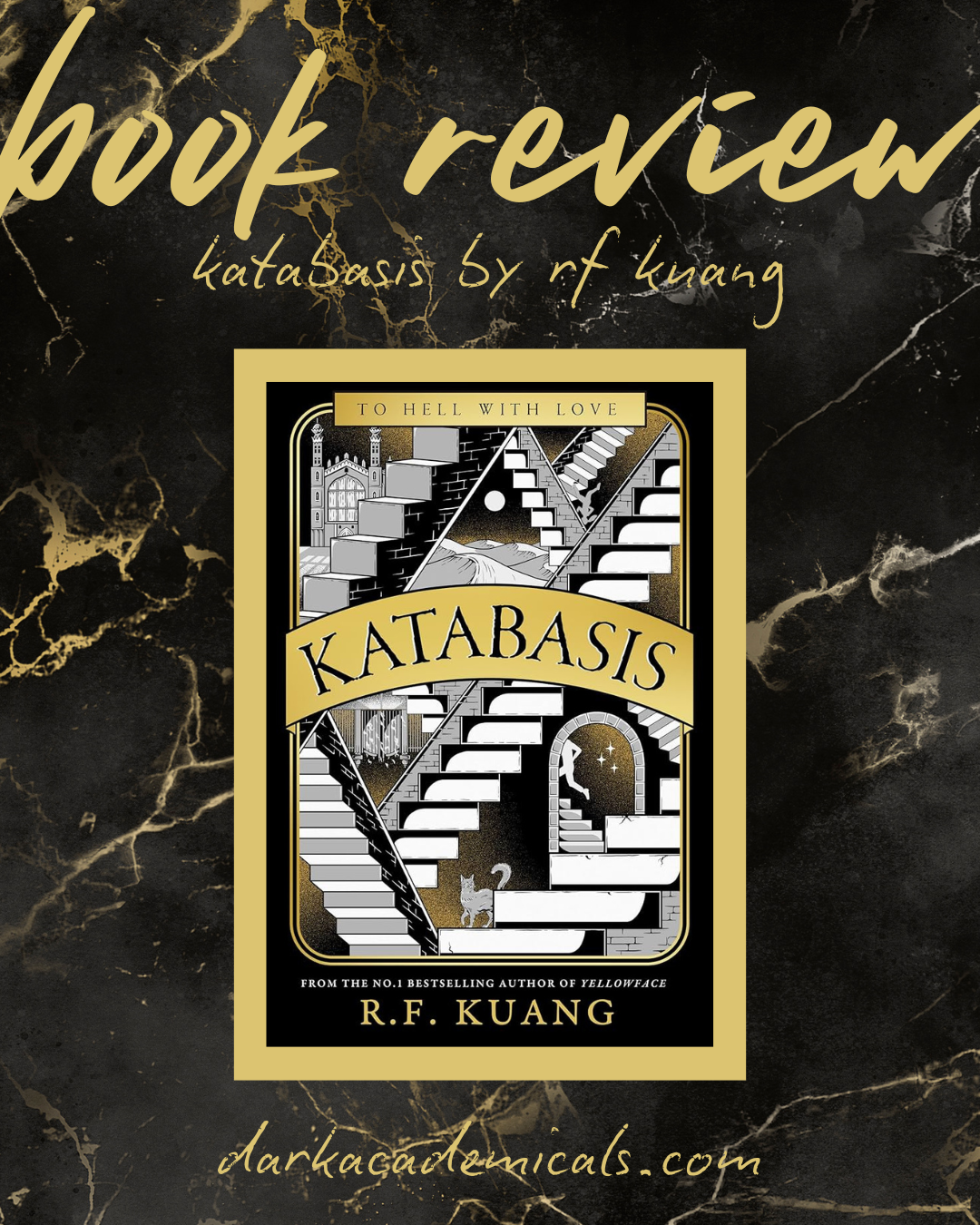
There’s always a lot of pressure on the first book that we chose for a new season of our dark academia podcast, ‘The Dark Academicals’, and ‘Katabasis’ has given me only good vibes for season twelve.
This novel immediately had a tone that was entirely unexpected to me and I was engaged and excited from the first paragraph:
Cambridge, Michaelmas Term, October. The wind bit, the sun hid, and on the first day of class, when she ought to have been lecturing undergraduates about the dangers of using the Cartesian severance spell to revise without pee breaks, Alice Law set out to rescue her advisor’s soul from the Eight Courts of Hell.
‘Babel’ had a heaviness to it, and while ‘Katabasis’ is incredibly intense (it literally gave me strange dreams which kept waking me up for about four nights), but there’s a tongue-in-cheek element to the writing which piqued my interest immediately.
The writing is dense, the references and discussions are lofty and hard to grasp, the amount of intertextuality is intimidating, so it’s a slow novel, but I never got bored or fed up of Alice and Peter’s journey; I was all in. But it was slow and it took me around ten days to read, reading it every day.
Something that helped with the pace of the novel was the flashbacks to Alice’s time at Cambridge leading up to Professor Grimes’ death and Alice’s descent into Hell. Watching her slowly unravel was fascinating, and horrifying, as she gave up her health and sanity in pursuit of academic perfection. This thread quietly wove an idea through the narrative that made Alice’s sacrifices, in school and in Hell, even more devastating: people will go to Hell and back for academia, but academia and its institutions don’t give a crap about you. Watching Alice learn this was heartbreaking.
She had absorbed so many of the view points that holds academia together: misogyny, sexism, a blindness to the daily abuses of the institution and it’s academics, and accepting that she has to accept and assimilate with these things in order to achieve her goals. The unravelling of everything she believed was powerful and really made me race through the ending of the book, and actually left me wanting a little more after I turned the last page.